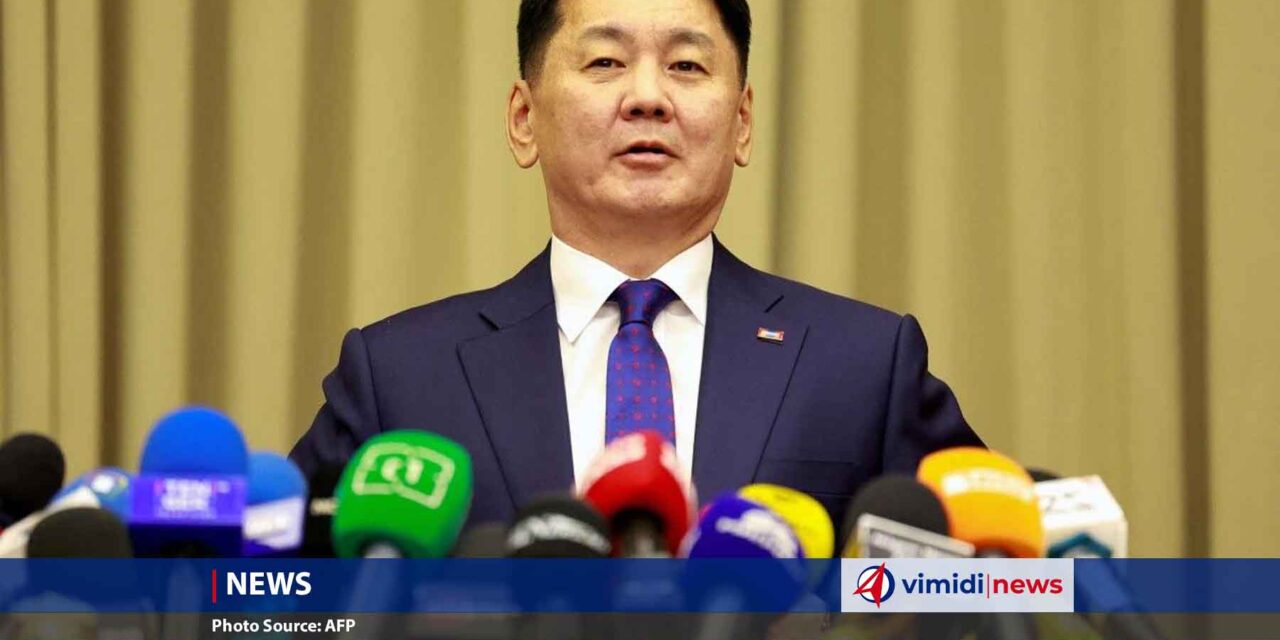
Mongolia’s President Ukhnaa Khurelsukh announced his resignation on Tuesday, stepping down amid mounting political pressure over corruption allegations and threats of impeachment from opposition parties. The resignation marks a major development in Mongolian politics, where opposition lawmakers had intensified calls for accountability over allegations that fueled public scrutiny and political unrest. Facing the prospect of impeachment proceedings, Khurelsukh opted to leave office before the situation escalated further. Under Mongolia’s Constitution, the presidential succession process provides for the transfer of presidential duties to the chairman of the State Great Khural, the country’s parliament, on an interim basis until a new president is elected. The General Election Commission is then expected to organize a nationwide presidential election, with eligible political parties nominating candidates to complete the transition. The timeline for the vote will depend on constitutional and electoral requirements following the president’s formal departure. The resignation is expected to usher in a period of political uncertainty as Mongolia’s political parties reposition themselves ahead of a potential presidential contest. Analysts say the leadership change could reshape the country’s political landscape and reignite discussions on governance, transparency, and anti-corruption reforms in the mineral-rich democracy. Khurelsukh, who previously served as prime minister before winning the presidency, has been one of Mongolia’s most influential political figures in recent years. His departure now leaves the country preparing for a leadership transition at a time of heightened public attention on government accountability and institutional integrity.
Mongolia’s President Resigns Amid Corruption Allegations