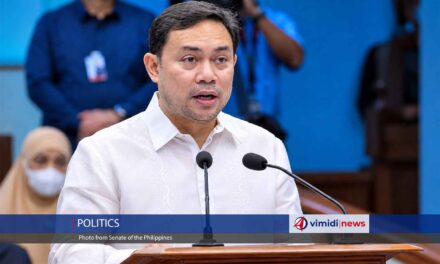

Rep. Sandro Marcos has defended the ₱4.74-billion allocation proposed for Ilocos Norte’s first district in the House version of the 2027 national budget, saying it remains insufficient to meet the district’s long-standing development needs. He cited priorities such as installing streetlights across Laoag City, building multipurpose facilities, completing covered courts and continuing financial assistance to residents. He also pointed to economic pressures, including inflation, rising fuel prices and the threat of El Niño, as reasons to keep support reaching local communities. The proposed amount is a substantial increase from the ₱369.4 million listed for the district in the President’s National Expenditure Program, a difference of about ₱4.38 billion. That comparison has drawn attention to how the House version changed the proposed infrastructure spending. The ₱4.74 billion is a proposed allocation in the House bill; it should not be confused with money already released or spent.
The People’s Budget Coalition reported that 405 projects worth about ₱4.37 billion in the House bill had no matching items in the original proposal. Budget trackers also identify hundreds of listed projects in the House version, but the published information does not clearly show who proposed each one. A project located in a district may have been proposed by its representative, another lawmaker or a government agency, so location alone does not establish who requested it. The debate is therefore about both the district’s needs and the public’s ability to scrutinize how the proposed funds were assembled. Marcos says the allocation would address a backlog of local priorities and that it still would not cover every project sought. Critics and budget monitors are asking for more detail on the individual projects, their costs, their expected beneficiaries and the officials or agencies that proposed them. Those details would help residents determine whether the allocation is supported by clear needs and transparent planning. The Palace has said budget insertions are not inherently improper if they serve the public and funds are used properly, while warning against ghost projects and substandard work. The available reporting does not establish that the proposed projects are improper. It does, however, leave important questions about the scale of the increase and the lack of publicly identified sponsors. Publishing the project list with clear descriptions, locations, costs and proponents would allow the public and Congress to assess the proposal before the budget is finalized.